
About
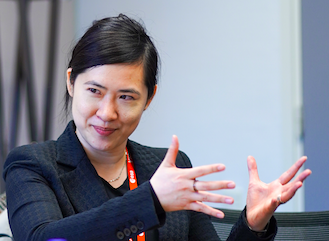
Welcome to the blog of Dr Nikita Chiu – Associate Professor in Space Innovation & Technology Governance at Durham University.
Dr Nikita Chiu joins Durham as Associate Professor in Space Innovation and Technology Governance in 2024. In 2019, she was named Ad Astra Distinguished Fellow in Robotic and Outer Space Governance by the Space Engineering Research Center at USC. Previously, she served as Senior Lecturer in Innovation Policy at the University of Exeter. She was also the Research Fellow in Robotics and Outer Space Technologies at the Department of Politics and International Relations at the University of Oxford, and is a former Research Affiliate at the Centre for the Study of Existential Risk at the University of Cambridge. An International Relations scholar by training, Dr. Chiu taught Foreign Policy and Global Governance first in Hong Kong, then in Tallinn and the UK. Prior to her career in Technology Governance, she read Technology Policy at St Edmund’s College at the University of Cambridge, and gained her PhD from the Graduate Institute of International Studies in Geneva in 2014.
Dr Chiu is a former recipient of the Ernst Mach Grant. Named after the Austrian physicist, the grant enabled the investigation of multilevel governance policy at the city, national, and international (UN) level. Dr Chiu also contributed as a mentor for Space4Women, a network organized by the United Nations Office for Outer Space Affairs(UNOOSA) to support the UN Sustainable Development Goals. She was selected as one of “20 under 35” future leaders to watch by the Space & Satellite Professionals International in 2019 for her work on space sustainability.
Dr Chiu’s ongoing research investigates the dynamics between technological advances and governance, with a focus on understanding the socio-economic, policy, and security impact brought by the increasing commercialization of robotics, quantum, and space technologies. Her latest research interest lies in integrating and strengthening diversity and inclusivity for high-performing/no-compromise technology sector, specifically Formula One, Formula E, and Polar science.
Team
My team includes a highly motivated group of students and postdoctoral researchers from across the world, all working on areas focused on advancing a more sustainable and inclusive future for the burgeoning cislunar economy. They are:
Student supervisees
Cyrill Bistrovs
PhD Student
SISI: Sustainable & Inclusive Space Innovation for the Cislunar Economy
Cyrill is a PhD researcher at Durham University Business School and Space Research Centre. His work examines governance, communication, and modelling challenges in the emerging cislunar economy, supporting responsible and inclusive space innovation. He previously led the Baltic Space Consortium’s ecosystem-building initiative across Baltics: Latvia, Lithuania, and Estonia. Cyrill holds a background in Diplomatic Studies from the University of Oxford, alongside training in Pure Mathematics with Theoretical Physics from UCL, where he was affiliated with the Cosmology group. He is also an alumnus of the International Space University.
Sam Potter
Student Research Assistant (Undergraduate) – Human Space Exploration
Sam is a Natural Sciences student specialising in Mathematics and Physics with a strong interest in space exploration, astronautics, and human spaceflight. Alongside his studies, he uses his free time to keep fit with a variety of sports and he is an active member of the University Air Squadron. He aspires to become a test pilot and ultimately an astronaut, combining scientific research, aviation, and leadership throughout his career.
Postdoctoral supervisee
Ulaş Kutsi Çezik
Visiting Postdoctoral Researcher – Emerging Space Economies
Dr. Ulaş Kutsi Çezik is a Lecturer in the Department of International Relations at Karadeniz Technical University, Türkiye, where he also serves as Coordinator of the Office of Internationalization. He is currently a Academic Visitor at Durham University Business School under the TÜBİTAK International Postdoctoral Research Fellowship Programme. His current research examines how national space policies are translated into technological innovation and commercialisation through innovation ecosystems and institutional collaboration. His broader research interests include international relations, comparative politics, science and technology policy, space policy, India’s political and strategic affairs, and international academic collaboration.